


The Short Answer: A clean exit from a law firm requires financial preparation, a plan to reduce owner dependency, and a clear strategy for transitioning clients, operations, and leadership. Without those pieces in place, firm owners risk leaving value on the table or watching their practice unravel after they leave.
Table of Contents
Most attorneys spend years building a successful law practice. Fewer spend time thinking about how they’ll leave it. For solo practitioners and small firm owners, the exit is often treated as a future problem until it’s too late. A health scare, a shift in market conditions, or simply reaching the point of retirement can turn “someday” into “right now” faster than expected.
The challenge is that law firms don’t exit the same way other businesses do. Client relationships are personal, revenue is often tied to one or two core people, and the legal profession carries regulatory and ethical obligations that make transitions more complex than a standard business sale.
A strategic exit takes planning, and that planning should start well before you’re ready to walk away.
Why Law Firm Exits Are Unique
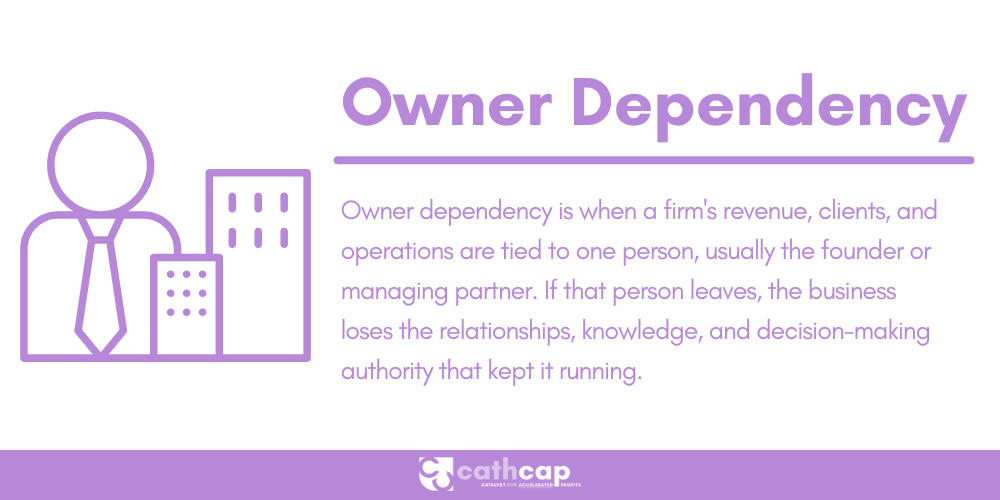
In most small law firms, the business runs through the owner. Client relationships, referral networks, reputation, and revenue generation all center around one person. That works fine while you’re running the firm, but it becomes a serious problem when you are ready to leave.
When a law practice can’t function without its sole owner, it becomes much harder to transition. A potential buyer sees concentrated risk, clients who may not stay, revenue that could drop, and operations that depend on someone who won’t be there. For solo practitioners especially, this is the single biggest issue to address before planning an exit. If the firm only works because of you, there’s very little to hand off.
Reducing owner dependency isn’t something you start in the final months. It’s a process that takes years of shifting client relationships, building internal leadership structure, and creating business processes that hold up after you step away.
What Makes a Law Firm Hard to Sell
Beyond owner dependency, law firms carry structural challenges that other businesses don’t. Attorney-client relationships are governed by ethical rules that limit how they can be transferred. The firm’s intellectual property and brand equity are often tied to the owner’s name. Revenue concentration among a small number of clients creates risk for any buyer doing their homework.
Regulatory compliance adds another layer. State bar rules, employment agreements, trust account management, and client file obligations all need to be handled properly during a transition. For firm owners in states like New York, where legal professionals face additional regulatory requirements, the complexity only increases.
None of this means a clean exit is impossible. It means you need to plan for these realities rather than discover them at the last minute.
Building an Exit Plan That Works
Start With the Financial Picture
Before you think about timelines or buyers, you need to understand what your firm is actually worth. That starts with clean financials: revenue trends, profit margins, cash flow, liabilities, and any retirement accounts like a cash balance plan or other retirement planning vehicles.
Most firm owners overestimate the value of their practice because they haven’t separated their personal production from the firm’s standalone performance. If 80% of revenue is tied to your billable hours, that’s not firm value, that’s your salary with overhead.
A financial advisor or fractional CFO can help you figure out the difference. They’ll look at the business through the eyes of a potential buyer and identify what needs to change before the firm is ready for a smooth transition.
Reduce Owner Dependency Before You Leave
This is where exit planning and daily operations overlap. If you want a seamless transition, the firm needs to prove it can run without you well before you actually leave.
That means:
-
Transitioning key client relationships to other attorneys over time, not all at once during your final weeks
-
Documenting business operations, employment agreements, and internal procedures so nothing lives only in your head
-
Building leadership among senior partners or associates who can step into decision-making roles
-
Creating a succession plan that gives the next generation of firm leadership time to grow into their responsibilities
The goal is to make your departure feel like a planned next step rather than a disruption. Firms that handle this well maintain client retention, staff stability, and revenue continuity through the transition.
Know Your Exit Paths
Not every law firm exit looks the same. Your exit strategy should match your firm’s size, structure, and unique needs. The most common paths include:
-
Internal succession: Selling to a non-equity partner or senior associate who steps into ownership. This works well when you've already developed leadership within the firm.
-
External sale: Finding a potential buyer outside the firm, whether that's another practice, a private equity group, or a solo practitioner looking to acquire an established client base.
-
Merger or counsel arrangement: Joining another firm under a structured counsel arrangement that lets you wind down your role over time while your clients transition.
-
Planned wind-down: Closing the practice on your own terms with a clear timeline for client transition, file management, and regulatory compliance.
Each path has different financial, operational, and legal implications.
Avoiding the Most Common Pitfalls
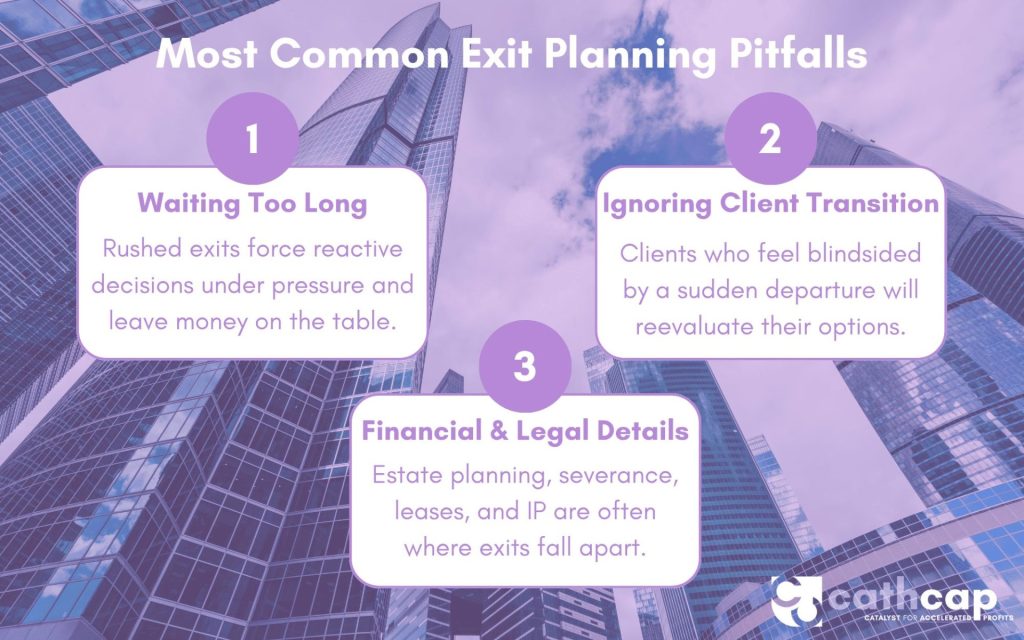
Waiting Too Long to Start
Exit planning should begin three to five years before your target departure date, not six months out. A strategic exit takes time to build. You need time to reduce owner dependency, strengthen the firm’s financial picture, and position the practice for a potential buyer or successor.
Firm owners who wait too long often end up making reactive decisions under pressure. Market conditions shift, health issues surface, or a key attorney leaves unexpectedly. These unforeseen circumstances can turn a manageable transition into a scramble. The earlier you start, the more options you have and the stronger your negotiating position will be.
Ignoring Client Transition
Your clients are one of the firm’s most valuable assets, but only if they stay. Attorney-client relationships need a deliberate handoff plan. That means introducing clients to the attorneys who will take over their matters, communicating the change clearly, and giving the relationship time to develop trust before you’re gone.
Clients who feel blindsided by a departure will look to reevaluate their options. That reduces the firm’s value in a sale and can damage your reputation in the legal profession long after you’ve left. A well-managed client transition protects both the firm’s future and the relationships you spent years building.
Skipping the Financial and Legal Details
The financial side of an exit goes well beyond the sale price. Estate planning, severance packages, employment practices, real estate leases, and intellectual property all need to be addressed. For firm owners with a family member involved in the business, succession and ownership transfer add another layer of complexity.
These details are easy to overlook when you’re focused on the bigger picture, but they’re often where potential pitfalls show up. A team who understands the legal landscape can help you work through the specifics and build an exit plan that accounts for what others miss.
Your Next Step
A clean exit from a law firm doesn’t happen on its own. The firms that transition well are the ones that started planning years in advance, tackled owner dependency early, and built a financial foundation strong enough to support the transition.
Whether you’re a solo practitioner thinking about retirement or a firm owner exploring a sale or succession plan, the process starts with understanding where your practice stands financially and what needs to change before you’re ready to step away.
Cathcap works with law firms to build the financial clarity and operational structure that makes a smoother transition possible. We help with everything from financial reporting and cash flow planning to exit strategy development. Our team helps firm owners prepare for what comes next. Book a free consultation today to begin preparing for your future.
Frequently Asked Questions
Ideally, you would begin three to five years before your target departure date. Exit planning takes time because you need to reduce owner dependency, clean up financials, transition client relationships, and build internal leadership. Starting early gives you more options and a stronger position.
Owner dependency means the firm’s revenue, client relationships, and daily operations are overly dependent on one person. When a potential buyer or successor looks at a firm with high owner dependency, they see additional risk. Reducing it before your exit increases the firm’s value and makes a seamless transition more realistic.
Yes. A fractional CFO can help firm owners understand the financial value of their practice, build clean reporting, develop a cash flow plan for the transition, and support the financial side of succession planning or a sale. At Cathcap, we have worked with legal professionals to build the financial foundation for a strategic exit.


Recent Comments